Last updated November 2026
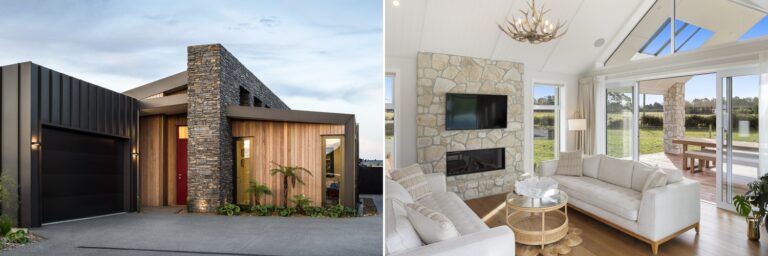
Stone has always been part of how Timaru looks. The bluestone, a volcanic basalt quarried locally, went into many of the town’s older commercial buildings, churches and walls, and river stones from the Canterbury rivers turn up in garden walls and chimneys across South Canterbury. Plenty of people building or renovating now want some of that character on their own home, whether it is a full exterior, a base course under weatherboards, a pair of entrance pillars or a fireplace wall.
★View the Best Garden Rock and Stone Suppliers in Timaru→Building a house in solid stone is rarely practical today, which is where stone cladding and stone veneer come in. This guide covers the main types, where they work, what has to sit behind them and the questions worth asking before you order.
Stone Cladding and Stone Veneer: The Main Types
The terms are often used loosely. Broadly, there are four ways to get a stone finish on a wall:
Solid stone masonry
- What it is
- Full-depth stones laid as the wall itself, or as a thick outer skin
- Things to know
- Very heavy, needs its own foundation and engineering, and is mostly used for heritage work and freestanding walls
Natural thin stone veneer
- What it is
- Real stone sawn or split into thinner pieces and fixed to a backing wall
- Things to know
- Genuine stone, but still relatively heavy, so the support and fixing need checking
Manufactured stone veneer
- What it is
- Lightweight concrete cast in moulds taken from real stones, then coloured to match
- Things to know
- Much lighter, made in set shapes and sizes, and usually fixed with mortar over an approved backing
Stone-look panels
- What it is
- Large sheets or panels with a stone texture, often composite or printed
- Things to know
- Quick to put up and suited to interiors and small features; check whether they are made for exterior use
For most homes, one of the two veneer options is the practical choice. They give the look of a stone wall without the weight and cost of building one.
Where Stone Veneer Works Well
- House exteriors: a full stone elevation, or a base course to about window sill height under lighter cladding
- Entrances and pillars: columns at the front door or garage, gate pillars and letterbox walls
- Fireplaces and chimneys: a stone surround or a full chimney breast, indoors or in an outdoor living area
- Feature walls: a single wall in a living room, stairwell or entry
- The garden: facing retaining walls, planter bins, seating walls and entrance walls at the end of a driveway
One place it does not belong is underfoot. Veneers are made for vertical surfaces and are generally not suitable for paths, patios or steps, which need a paving product.
Choosing a Stone Profile
The profile is the shape and pattern of the stones. The common families are:
- Ledgestone or stacked stone: long, thin pieces laid in horizontal bands, a clean look that suits modern homes
- Schist: flat, layered stone in greys, browns and golds, the look most people associate with Central Otago
- River stone: rounded stones, a natural fit in Canterbury where river stone walls are part of the landscape
- Boulder: larger, chunky stones for a rugged, high country feel
- Basalt: dark, dense volcanic stone that sits comfortably beside Timaru’s bluestone buildings
Look at samples outside and in daylight, next to your joinery, roofing and other cladding colours. Ask to see finished jobs rather than relying on a single stone, because the overall pattern, the mortar joints and the corners change the look a great deal. Tinting the mortar to suit the stone is worth discussing too.
What Sits Behind the Stone
Stone veneer is a finish, not a structure. It relies on the wall behind it, so the backing has to be one the product is approved for. Common backings for manufactured veneer include fibre cement sheet, brick, concrete block and precast concrete panels, each installed to the manufacturer’s details.
Weathertightness
On a house exterior the stone becomes part of the cladding system that keeps water out. That means the installation has to follow the product’s technical documents, including the cavity, flashings, window head and sill details, and the junctions with other cladding. These junctions are where the detailing matters most.
Consent
Adding stone to the outside of an existing house, or replacing one cladding with another, usually needs a building consent, so talk to Timaru District Council’s building team before you order. Feature walls inside a home and garden walls are usually simpler, but it is still worth checking.
Weight
Manufactured veneers are light enough that most do not need an extra footing or wall ties, which is a big part of why they are popular for renovations. Natural stone veneer is heavier, so ask the supplier what support it needs.
Fireplaces
Stone around a fireplace is one of the most popular uses. Before you choose, check the clearances in the installation instructions for your fire, and confirm with the council that the fire design, the backing and the veneer together meet the Building Code. The backing close to the fire usually needs to be non-combustible, so confirm this with your installer.
South Canterbury Weather and Maintenance
Timaru gets frosty winter mornings, strong nor’westers and salt air near the coast and the port. Good quality veneer is made to handle long-term weathering, but a few habits keep it looking right:
- Check the stonework once a year for cracks that might point to building movement
- Reapply a waterproofing sealer if the manufacturer recommends it, especially on exposed or coastal walls
- Wash off dust and dirt with a hose and soft brush rather than a high-pressure water blaster
- Keep veneer above the water line around pools and spas, as chlorine can discolour coloured concrete products
Questions to Ask Before You Order
- Does the product have an independent appraisal showing how it meets the New Zealand Building Code?
- Which backings is it approved for, and are there technical drawings for my type of wall?
- Who will install it, and will they provide a producer statement for their work?
- What warranty applies, and what conditions does it depend on?
- Are there matching corner pieces, caps and trims?
- How is it delivered, and what is the lead time?
Where Classic Stone Fits
Classic Stone makes manufactured stone veneer at Winchester, just north of Temuka, and has been doing so since the company was established in 2000. Its veneer is cast from hand-selected natural stones and comes in eight stone profiles, including Southern Ledgestone, Colonial Schist, River Stone and New Zealand Basalt, with trim products for corners and edges. It goes over fibre cement sheet, brick, concrete block and precast panels, has an independent appraisal against the Building Code, and house work is done by installers Classic Stone has trained.
To see the stone in person, you can request samples or a brochure through the website, or call (03) 688 7036.